






In-plant logistics visibility is not simply about finding a missing pallet. It shows whether the plant’s systems have the right material, in the right place, cleared for production.
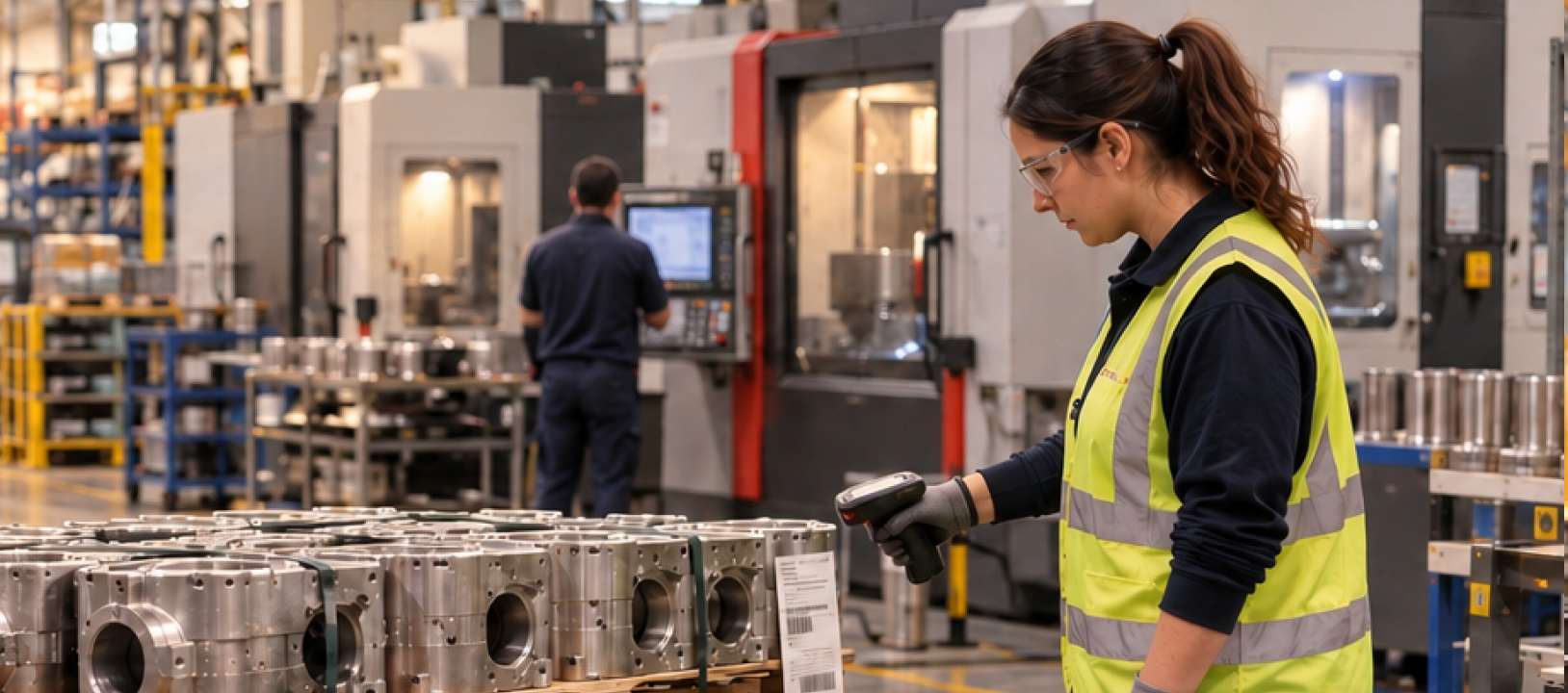
It’s 6:40 a.m. The line is ready, but its next load of molded metal parts has not arrived. They’re stacked on a pallet somewhere. The plant’s inventory system says the pallet was “staged,” or placed in the waiting area near the line.
A separate system shows whether the parts passed inspection and may be used. Now operators are on the radio while a supervisor searches for material everyone thought was ready.
The pallet appears fourteen minutes later, and production resumes. But finding it doesn’t explain the failure.
Was the location record old? Was the pallet scanned into the wrong area? Did a forklift move it without linking the vehicle to its load? Did the inspection approval fail to reach the inventory system?
Until the plant knows which fact was wrong, it cannot trust the next answer.
Fourteen minutes can become a seven-figure problem when the same information gap interrupts production week after week. An ABB survey of 3,215 industrial decision-makers reported a median downtime cost near $125,000 per hour. At that rate, one ten-minute material-related line stop each week creates an illustrative annual production exposure of roughly $1.04 million.
This is not a savings promise or every plant’s number. A missing pallet doesn’t always stop a line. But when unreliable material information delays production, the cost can far exceed the wages of the people searching. Each manufacturer should recalculate it using its own throughput, margin, scrap, labor, and recovery costs.
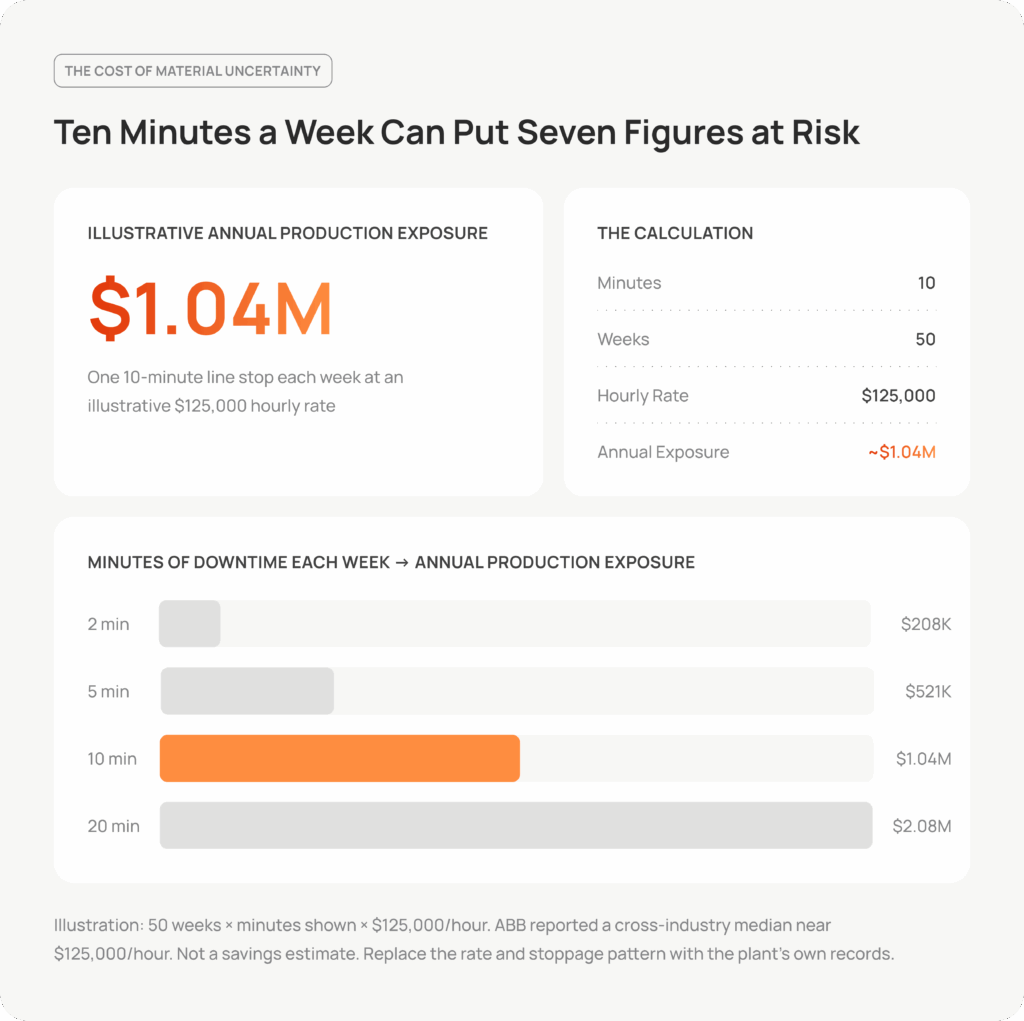
Illustrative annual production exposure from one ten-minute stop per week. Replace the downtime rate with the plant’s own figure.
What the Line Stop Exposes
The usual response is to find the pallet, restart the line, and remind everyone to scan more carefully. That recovers the shift. It doesn’t repair the broken chain of evidence between receiving, storage, staging, quality release, and line-side delivery.
In-plant logistics visibility requires more than another tracking screen. We engineer around the equipment and systems the plant already has, connecting approved cameras, barcode stations, RFID readers, location tags, and edge devices to its inventory, warehouse, and manufacturing systems.
What In-Plant Logistics Visibility Must Confirm
Seeing a forklift move does not reveal what it carried. Seeing a pallet beside the line does not confirm the parts, quantity, or inspection approval. Those facts must remain connected as material moves.
Each tool answers one question. A barcode can confirm a deliberate handoff. RFID can identify a tagged item at a read point. Real-time location can follow a carrier. Computer vision can observe labels, movement, or entry into a defined area when lighting and camera placement support it.
The plant needs a verified event: this pallet, carrying these parts, arrived here at this time and is cleared for use.
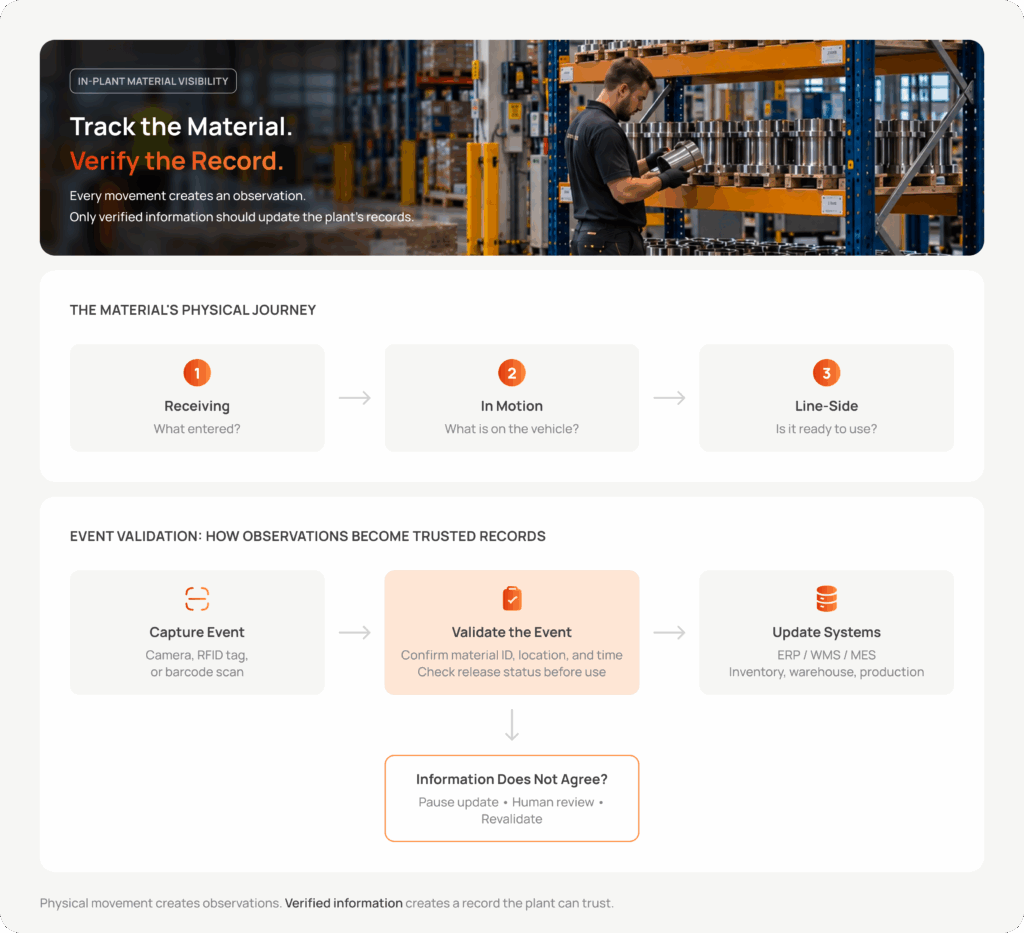
Material movement creates observations. Only verified information should update the plant’s official records.
From Plant Signals to a Trusted Handoff
We make in-plant logistics visibility reliable by bringing those observations together, filtering outdated readings, preserving the evidence, and updating the correct system after the required checks.When information doesn’t agree, the system pauses the update for the responsible person to review rather than create an inaccurate inventory record.
Our manufacturing practice covers logistics visibility, vehicle monitoring, computer vision, and plant-system integration.
Our real-time defect-detection case study shows experience with industrial cameras, on-premise processing, stored evidence, and operator review. That supports our capability, not a logistics ROI claim. This is not a published case study for this exact logistics application.
The right pilot starts with one costly material route. Run it beside the current process, compare its records with what operators confirm, and decide whether the evidence supports automatic inventory updates.
Stop Paying for Uncertainty
When production is ready but the material’s location and approval have to be pieced together through radio calls and spreadsheets, people are compensating for disconnected information.
Request a Manufacturing Systems Assessment with Softarex to examine one material route, calculate what its uncertainty costs, and define what a focused pilot must prove before the plant trusts it.