






Detection spots the risk. The right action protects the plant.
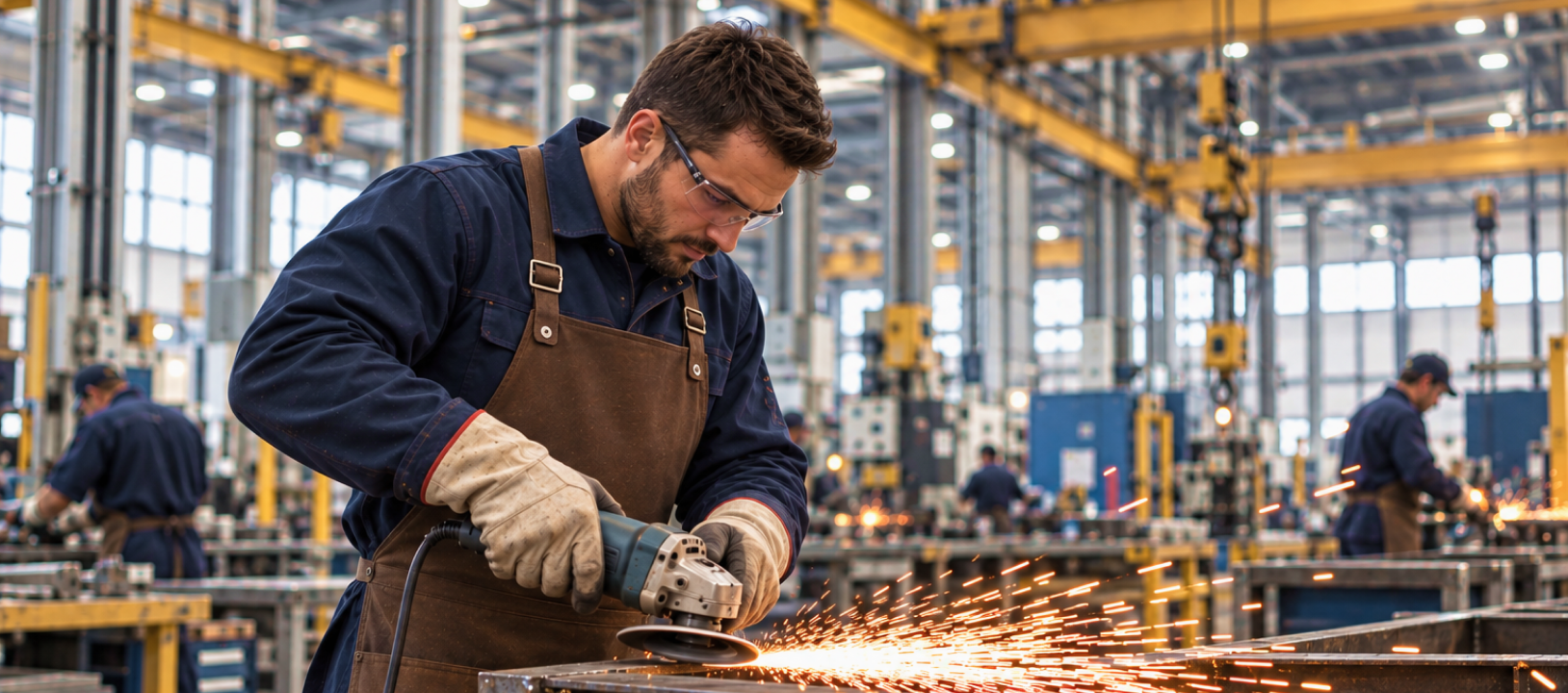
Picture a metal fabrication plant during a busy shift. Heat and exertion fog an operator’s safety glasses. To get a clearer view, the operator removes them while grinding a metal part. A supervisor sees it and stops the work.
The immediate danger is addressed. But production pauses, a supervisor is pulled away, and the plant pays in lost time. The reason the glasses fogged is never fixed. Days later, it happens again.
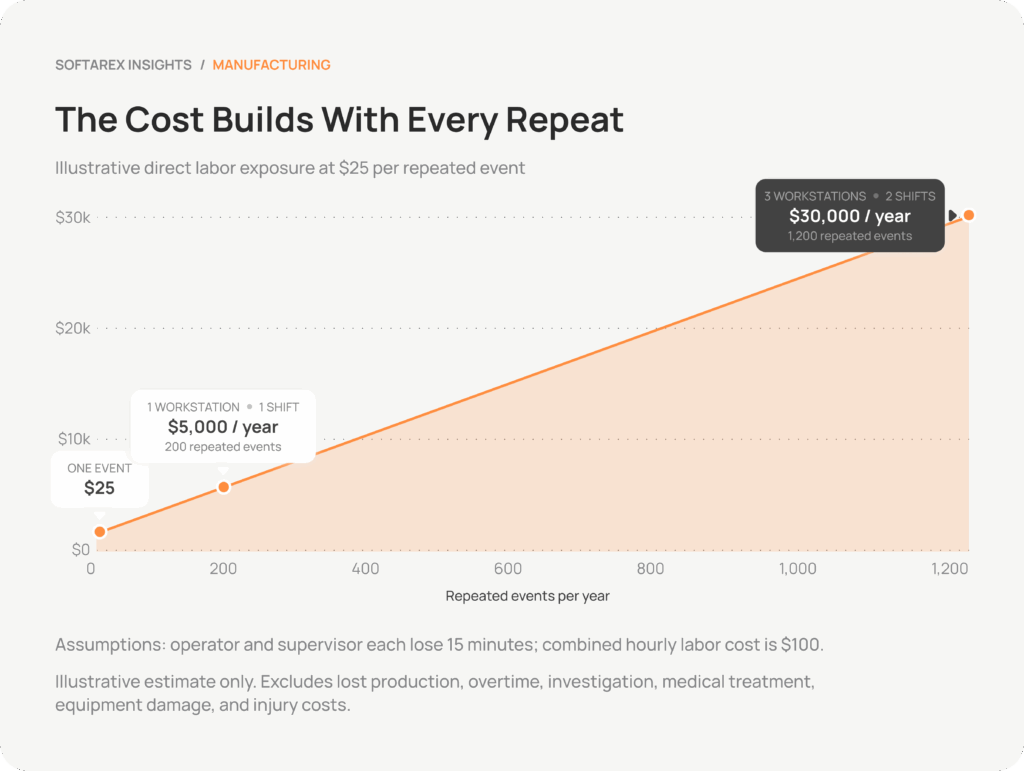
One interruption may look minor. If it happens four times a week at one workstation, the direct labor exposure can reach $5,000 a year. Across three workstations and two shifts, that same pattern creates an illustrative exposure of $30,000 annually.
That still excludes lost production, overtime, investigations, equipment damage, medical treatment, and possible injury costs. Each plant should compare the estimate with its own records.
Illustrative direct-labor exposure from repeated events. Assumptions are shown in the graphic.
What Happens After an Alert Matters Most
Plant managers don’t need another stream of notifications. They need to know whether the risk was addressed, the cause was corrected, and the same problem is likely to return.
This is where our custom engineering capabilities come into play. We build plant-specific systems around approved cameras and sensors to recognize defined safety conditions, preserve a short video clip of each event, notify the appropriate person, and connect the event directly to existing safety or maintenance workflows.
We also recognize that closing an alert only confirms that someone responded; it doesn’t prove that conditions changed on the plant floor. Once work can resume safely, our system helps address the more important question: What was actually corrected, and did that correction prevent the risk from returning?
This approach aligns with OSHA guidance on incident investigation, which emphasizes finding and correcting underlying causes rather than focusing only on individual actions.
Seeing the Risk Is Not Solving It
Workplace safety computer vision can identify conditions such as missing or incorrectly worn personal protective equipment (PPE). PPE includes safety glasses and other task-specific protective equipment. Research on computer vision for PPE monitoring shows how these systems can support safety oversight.
But a camera can only show that the glasses were removed. It cannot explain why.
The glasses may have fogged, fit poorly, or made the task difficult to see. If the plant closes the alert without understanding the cause, the risk remains.
The NIOSH Hierarchy of Controls supports addressing hazards close to their source. The lasting answer might be better ventilation, different eyewear, or a change in the work environment.
Detection captures the moment. Corrective action helps prevent the next one.
From Plant Data to Plant Action
We help turn a detected event into something the plant can act on. A verified event could notify the environmental health and safety team, be added to a safety record, or create a maintenance task. Our team can then assign an owner, set a completion date, and check whether the condition returns.
The Softarex Production Monitoring System case study explains how cameras, sensors, and operational data can become alerts managers can use. Our Equipment Maintenance Software demonstrates task creation and assignment.
Stop Paying for the Same Problem
If the same safety event keeps returning, the plant does not need another closed alert. It needs a clearer path from detection to corrective action.
Discuss a Manufacturing Systems Assessment with Softarex to examine one recurring safety problem, estimate its business impact, review the systems already in place, and define what a focused pilot must prove.